
Currently, a lot of LinkedIn profiles mainly go through the optimization procedure with several factors. For example, some of the factors are refined headlines, keywords, and every suggested filled-out section. However, despite all these procedures, the entire optimization process can hardly bring meaningful leads, probabilities, and communications.
Moreover, the situation mainly occurs as many people generally consider that optimization mainly focuses on visibility rather than inducement. Because of the following consideration, people try to follow the algorithm, which makes their LinkedIn profile feel unfocused, impersonal, and generic.
In this article, we will highlight why most optimized LinkedIn profiles still do not convert and a few helpful processes to overcome the problem.
Contents
- 1 Visibility ≠ Conversion
- 2 The Real Job of A LinkedIn Profile
- 3 No Clear Positioning = No Conversion
- 4 The Headline Trap
- 5 The About Section That Nobody Finishes
- 6 Experience Without Impact
- 7 The Trust Deficit
- 8 Misalignment between Content And Profile
- 9 Attracting The Wrong Audience
- 10 No Clear Next Step
- 11 The Silent Visitor Problem
- 12 The Shift: From Optimization to Conversion Thinking
- 13 Fixing The Conversion Gap
- 14 Final Thought: A Profile That Converts Feels Obvious
- 15 FAQs
Visibility ≠ Conversion
As we follow the primary optimization process, the LinkedIn profile conversion clearly states that profile visibility will not guarantee conversion. Also, an optimized LinkedIn profile might appear in search results, but those profile views won’t generate any meaningful conversions.
For instance, here are a few points:
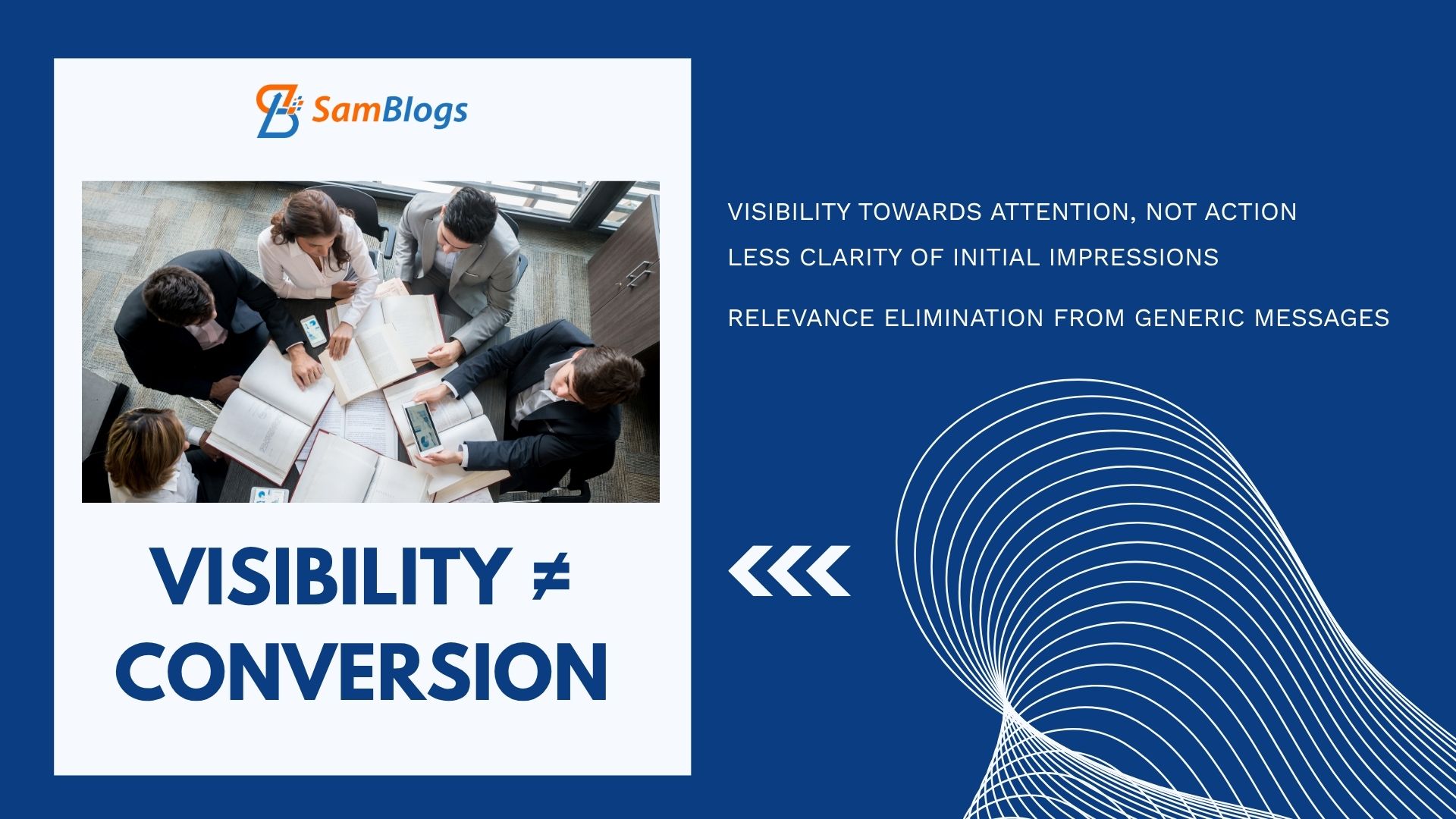
Visibility Towards Attention, Not Action
Your optimized LinkedIn profile can attract a lot of people, but it does not lead to any action or interaction on your profile. For example, highly-viewed profiles can attract clicks, but they do not generate commitment. Moreover, conversion only occurs when your profile convinces a visitor to interact with your profile content or services.
Less Clarity of Initial Impressions
When a visitor notices your profile, they instantly try to comprehend what services you might offer or whether your account content is relevant. However, if you do not immediately establish your profile value clearly, the visitor might stop interacting with your profile regardless of their search process.
Relevance Elimination From Generic Messages
LinkedIn optimization profiles heavily look for keywords that sometimes sound impersonal and weird. Also, trying to please every visitor might dilute the message while weakening the impact. Moreover, relevance is a factor that converts the profile interest to genuine intent.
The Real Job of A LinkedIn Profile
Many LinkedIn profiles mainly revolve around the incorrect objective in mind. Moreover, you can also refer to these as SEO products or digital resumes for highlighting experience or rank in search results. Nonetheless, there are also many points that you can follow:
Clearly Defining The Audience
An efficient LinkedIn profile positioning appeals to a certain kind of visitor, but not everyone. However, the factor can make it instantly obvious what kind of audience you are looking for and the kinds of services you can provide. Moreover, the visitor clarity enhances relevance and sorts out the proper opportunities.
Speaking A Proper-Solution Process
The audience needs to instantly comprehend what problems you are solving for them and how you do it. Also, instead of indefinite highlights, the LinkedIn profiles look for certain obstacles to particular results, which can make your audience easily understand your profile value.
Positioning Value, Not Just Experience
The primary objective of LinkedIn profile optimization does not define everything you have done so far. Instead, it mainly highlights what you can do for your audience through many kinds of help.
Also, there are a lot of factors your conversion-oriented profile might focus on. For example, they are generally conversion, impact, and results instead of responsibilities and roles.
No Clear Positioning = No Conversion
A LinkedIn profile with many factors, such as a high-quality picture, the right keywords, and a properly written summary, might look good at first. However, most of these optimized profiles stop at a single thing, which is mainly significant.
For instance, you can mainly refer to turning your profile audience into probabilities. Nonetheless, here are also some of the points you can follow:
Optimization without Tactics Does Not Convert to Value
A lot of people mainly focus on surface-level optimization, for example, some of the factors are:
- Generic skill lists.
- Keyword stuffing in headlines.
- Big summaries loaded with buzzwords.
Although these factors might help with search visibility, they do not directly answer the most significant queries a visitor might have.
No Definitive Targeted Audience
While optimizing a LinkedIn profile, people often make a general mistake of trying to please the whole audience, such as:
- Assisting in business growth.
- Proficient marketing expert.
- Enthusiastic regarding innovation.
The following statements are too wide and mostly fail at resonating with a certain group of the audience. Also, the clear positioning procedure mainly requires factors like:
- Knowing precisely the audience you serve.
- Comprehending their queries.
- Communicating directly to their requirements.
Weak Value Proposition
Several LinkedIn profiles categorize responsibilities instead of results, such as:
- Leading a team.
- Managing social media profiles.
- Working on different projects.
Moreover, the audience does not just care about tasks; instead, they also focus on outcomes. Furthermore, an efficient LinkedIn profile communicates or leads many factors, such as:
- What kind of problems are you solving?
- What kind of outcomes can you deliver?
- How are you different from your competitors?
The Headline Trap
The LinkedIn headline you have mainly represents the entire part of your profile. Moreover, it generally follows your profile name in many places. For instance, there are generally connection requests, messages, comments, and search results.
Also, upon in-depth analysis, you will get many points, such as:
Backtracking Meaningless Job Titles
A lot of headlines generally reflect the job titles, such as:
- Business consultant.
- Software engineer.
- Marketing manager.
The following titles are too generic and cannot differentiate you properly from your competitors. Also, several LinkedIn professionals share similar labels without giving any reason to click on your LinkedIn profile.
Attempting to Please Everyone
Wider LinkedIn headlines can disrupt your profile message in many and some of the disrupted headline examples include:
- Assisting in business expansion.
- Helping brands and companies with proper tactics.
- Grinding success through innovative solutions.
Although the following phrases might sound fascinating, they severely lack specificity. Especially when your LinkedIn headlines attempt to engage with every audience, it carries less probability for resonance.
Attending to Yourself instead of Readers
You can find a lot of self-centered headlines, such as:
- Experience LinkedIn experts who have more than 10 years of experience.
- Enthusiastic about delivering excellent results.
- Results-driven and dedicated outcomes.
The following statements mainly highlight your profile, but not the value you present in front of your audience. Moreover, the visitors mainly focus on the results you can deliver instead of your personal traits.
The About Section That Nobody Finishes
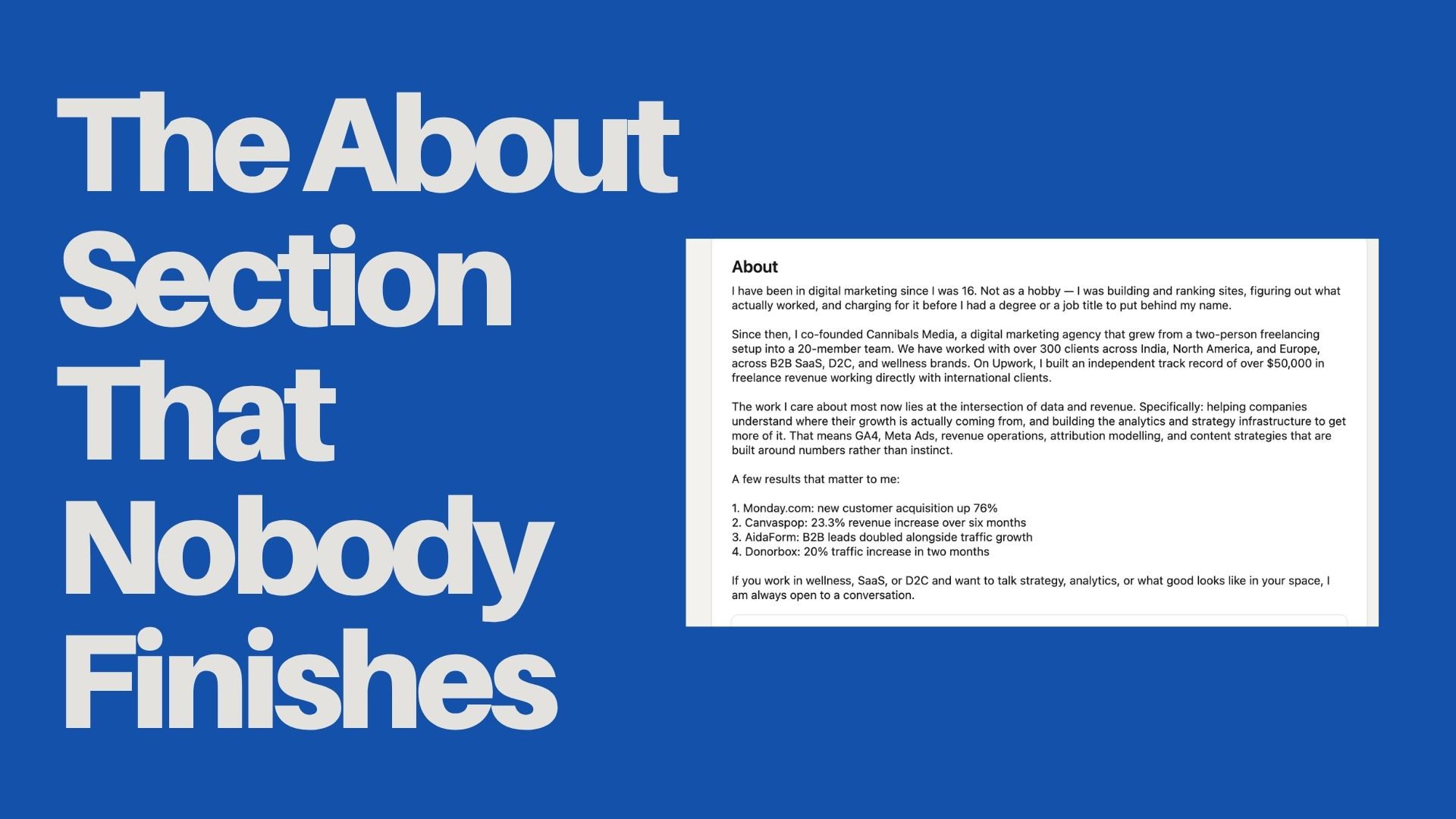
The about section is one of the primary locations for dealing with LinkedIn optimization strategy, as it can turn your profile audience into authentic opportunities. Despite having such significance, the About section also falls under one of the ignored LinkedIn optimization areas and the least-read places.
For example, several factors highlight the importance of this area, such as:
Resume-style Summaries vs Persuasive Narratives
You can mainly refer to the LinkedIn about sectIon as an extended resume summary or formal biography. Also, the resume-style about sectIon focuses on various facilities, such as:
- Previous roles and job titles.
- Career progression.
- Company names.
- Years of experience.
Although resume-oriented writing mainly creates credibility, it hardly clarifies whether it can answer the visitor’s authentic query for solving their problems.
Passive Resume And Active Narrative
Following our previous discussions, the resume-oriented writings are generally available in various formats, such as:
- Neutral.
- Descriptive.
- Formal.
The entire writing tone categorizes facts without leaning the readers towards a decision. On the other hand, the persuasive narratives mainly indicate:
- Communicating directly to the requirements of the readers.
- Showcasing outcomes and transformations.
- Building engagement through relevance.
No Hook = No Engagement
A lot of users mainly treat the LinkedIn about section as a formality rather than a conversion product. Even if they are highly optimized LinkedIn profiles, they often fail to create communications or leads because they miss the critical hook element. Nonetheless, here are some examples you can follow:
Hook Determination on Further Readings
The initial lines of the about section decide a lot of factors, such as:
- Whether the audience will click on the ‘see more’ option.
- If the section lines can trigger curiosity.
- Whether your LinkedIn profile feels relevant.
No Hooks Indicate No Continuation
Without proper opening lines, the readers find no logical or emotional motivation to continue their reading. Moreover, some of the basic consequences that might occur are:
- The LinkedIn profile becomes neglected and skimmed.
- Valuable or prominent information remains unseen.
- The conversion period concludes because it can initiate.
Missing Structure
Although the conversion space becomes an efficient space for LinkedIn, it is also one of the most poorly maintained areas. For example, here are a few references that might help you:
Structure Turning Data into Flow
A properly-written About section is not only about the mentioned details, but you can also arrange it. Also, if you do not follow any particular structure, it might result in:
- Ideas feel dispersed.
- Messages turn against each other.
- Readers or audiences lose direction.
Most Profiles as a Single Block of Text
A basic which you might experience with LinkedIn profile optimization, especially with the About section, is the opaque paragraph with different factors, such as:
- No sections.
- No breaks.
- No visual hierarchies.
The following factors build cognitive profusion, specifically on smartphones, where readers do not process large unbroken messages; instead, they skip them.
Experience Without Impact
As we have suggested earlier, several LinkedIn profiles highlight many features for increasing their visibility. For instance, some of the factors include excellent roles, long career stories, and years of experience.
Nonetheless, despite appearing efficient on the surface, they can hardly generate any meaningful engagements. Moreover, some of the examples are:
Listing Responsibilities Instead of Results
Listing your service or working experience on your LinkedIn profile only provides a single answer regarding the amount of time you have spent on these works. Moreover, it generally does not state anything more than the year numbers, especially your experience. For example, some of the points include:
- How did you do it previously?
- What outcomes did you build?
- Why is it significant to the users?
Roles And Experience ≠ Value
A lot of LinkedIn profiles mainly highlight what they worked for in an industry, such as:
- Leading groups.
- Managing campaigns.
- Overseeing operations.
- Working with deadlines.
Furthermore, these statements generally indicate your activity, not your impact in the industry.
No Transformation, No Story
Various LinkedIn profiles present their efficiency by portraying different highlights. For instance, you can mainly refer to listing roles, optimized format, responsibilities, and years of experience.
Moreover, despite putting in all the effort, they fail not only to experience but also to turn to transformation and story. For example, a lot of problems generally highlight factors like:
- Project contribution.
- Managing function.
- Working in a particular role.
However, despite describing all these factors, they still do not show what was transformed or changed because of their working experience. Moreover, the entire process indicates that transformation is more about movement, like:
- From a query to an answer.
- From an inefficient condition to an efficient one.
Why ‘What You Did’ Does Not Convert but ‘What Changes’ Does?
A lot of users still struggle to increase engagement rates on their LinkedIn profiles despite putting several necessary factors, such as activities, roles, and responsibilities. However, people need to understand that it is not just the lack of experience but also how they communicate their experiences to their audiences.
While optimizing your LinkedIn profile, you need to remember that your audience already expects proficiency from you. However, if you want to differentiate your profile from your competitors, here are a few steps you need to follow:
- Describing the achieved outcomes.
- Your contribution to the improvement of a certain project.
- How have you delivered an optimal result?
The Trust Deficit
One of the LinkedIn profile mistakes you can make is increasing the trust deficit with your audience. For example, your profile might look lavish with professional and polished keywords with skills, experience, and roles, but they might still fail to transform profile views into relevant opportunities.
Lack of Proof, Credibility, Or Authority Signals
Profiles sometimes include statements on their proficiency in the field or proven track records. However, without backing the evidence for your work, the details might seem empty, as your audience will question details such as:
- Results.
- Proofs.
- Source or credibility.
No Testimonials, Case Results, or Specifics
Some of the most noticeable testimonials on LinkedIn profiles mainly provide external validation. However, it is important to remember that self-description has its own restrictions. For example, anyone can highlight themselves without any negative impact, but the testimonials attach factors such as:
- Authentic colleague or client perspectives.
- Social evidence that strengthens claims.
- Third-party credibility.
Why Do Visitors Hesitate Even If They Seem Interested?
Your optimized LinkedIn profile can engage with the proper audience, create views, and even build authentic interests. However, despite the positive engagements, they still may seem hesitant because of various common factors, such as when you try to cover several areas in your profile, such as:
- Various services.
- Wide industries.
- Diverse messages.
Misalignment between Content And Profile
Misalignments between your content and LinkedIn profile are one of the LinkedIn profile mistakes that can occur during profile optimization. Moreover, the problem is not always the profile or content but a misalignment of both. For example, your content might still target a few factors such as:
- A certain category.
- A defined query.
- A proper audience.
However, despite all these factors, your LinkedIn profile might still seem generic or too ideal for your profile audience.

Attracting The Wrong Audience
One of the crucial steps in LinkedIn profile optimization is making sure that you reach out to the relevant audience following your skills. For example, if your skills rely on content writing or blog writing, you do not want to attract audiences from different fields, such as graphic design or video editing.
No Clear Next Step
Generating conversion for your LinkedIn profile might not seem an easy task, despite following various procedures. Moreover, one of the main reasons for low conversion is having no clear next step.
Furthermore, if your profile does not carry any proper interest without direction, it might lead to inaction. Nonetheless, interactions from profile visitors might also occur in different ways, such as:
- Relating to your messages.
- Comprehending your value.
- Feeling interested in your work.
The Silent Visitor Problem
A lot of visitors come across your profile, but they still do not interact with the content properly. Moreover, the problem can mainly occur because of many reasons, such as similar titles, wide claims, and generic claims, alongside other points like:
- Despite visiting your profile, most visitors never engage with your content publicly as they do not find your profile content relevant to their needs.
- The visitors scan, evaluate, and leave your profile without any proper response because your profile does not align with their industries.
- Moreover, your profile must convert without interaction by directly showing your working experience, efficiency, management time, and skills relevant to your field.
The Shift: From Optimization to Conversion Thinking
From Keywords to Clarity
Putting proper keywords in your LinkedIn profile can help them find you quickly, while clarity can help you to get chosen. Moreover, keywords can enhance your chances of appearing in search results. Also, clarity mainly answered several things, such as:
- Which audience can you help?
- What skills can you provide?
- What outcomes can you deliver?
From Completeness to Persuasion
In order to optimize a LinkedIn profile, completeness to persuasion is an important step. For instance, completeness generally centers on fulfilling sections and not driving action. Moreover, a completeness-oriented profile mainly focuses on factors such as:
- Congesting every field.
- Categorizing each role.
- Attaching every skill.
From Visibility to Trust And Intent
Visibility can help you gain attention for your LinkedIn profile, while reliability can build action. Also, being visible can indicate many things, like:
- Appearing in searches.
- Getting profile clicks.
- Attracting content views.
Fixing The Conversion Gap
Clarify Your Positioning
Your LinkedIn profile positioning can define your identity to your audience. Moreover, a lot of profiles attempt to appeal widely terms of factors and facilities, such as:
- Various industries.
- Different services.
- Several audiences.
Furthermore, all these mentions can create confusion among your audience.
Make It About Them
A lot of people make a profile optimization mistake by highlighting too many of their interests. Moreover, in several important sections of your LinkedIn profile, you have to prioritize your audience by writing about what they might find in your services and how you can help them.
Add Proof Everywhere
If you just brag about all your achievements without citing any proper evidence, they might feel less interested in interacting with your content or seeking your services. Moreover, you have to attach several factors, such as skills, working experience, and industrial connections, to convince them of your work and reliability.
Create A Flow (Hook to Building Interests, Establishing Trusts, and Guiding Actions)
You need to optimize your LinkedIn profile in a way to capture the attention of your profile instantly. For instance, the hook is the primary impression of your LinkedIn profile, which can decide whether a visitor will continue looking at your content or leave your profile immediately.
Final Thought: A Profile That Converts Feels Obvious
If your LinkedIn profile can convert efficiently, which does not seem clever or complicated, it might seem obvious to the audience. Moreover, the visitors can instantly comprehend your identity, skills, and the relevant audience without guessing too much. Moreover, if your LinkedIn profile can reach this level of intensity, the following steps might feel natural to proceed without uncertainty.
FAQs
Why does your LinkedIn profile not bring any leads or job offers?
– There are several reasons that your LinkedIn profile does not bring any leads or job offers, such as weak CTA, generic headlines, and keyword stuffing.
What is one of the biggest conversion mistakes you can make on your LinkedIn profile?
– One of the biggest conversion mistakes in your LinkedIn profile can be attempting to please every audience, as generic profiles might get mixed into the search feeds.
Do you still require keywords for LinkedIn profile optimization?
– Yes, but it is mainly for discovery and not for conversion, as keywords can bring audiences or visitors to your profile.