

Search has been all about finding things. Search engines have long presented results in the form of blue links, snippets, and ads.
The search experience is, however, changing now. Mediation Technology, including AI-driven platforms such as Perplexity, is transforming the way users consume information. They don’t merely present links but come up with straightforward, conversational responses. This change is transforming online behavior, SEO practices, and content models online.
Contents
Traditional SERPs: The Old Guard
Over the years, the online search pattern was determined by traditional SERPs. Google turned into an international source of information. The first page of results was blindly trusted by the users. Top position equated to power, visibility, and traffic.
SERP structure was quite plain but strong. Ads were displayed at the top and could not be easily missed. Organic results, featuring a blue headline, green URL, and a brief description, are listed below. These snippets enabled users to make informed decisions about the link they were to use.
Other characteristics emerged shortly. Facts were represented in a single view, known as knowledge panels. Direct answers were provided as snippets featured above the rest of the results. Image carousels, videos, and a People Also Ask section enriched the SERP and made it more competitive.
To companies, SERPs had become a battleground. Numerous SEO techniques came up to achieve the desirable first positions. Keywords, backlinks, and optimized content were key factors in determining success. Appearing on the second or later page was the signal of obscurity.
To users, the process was not novel. You entered a query, hovered over ten blue links, and tapped. There were occasions when you had to make several clicks to get the correct answer. The model was efficient, but not always consistently so.
Old-fashioned SERPs developed decades-long habits. They have equated searching with Googling. However, they also forced users into a repetitive loop, such as searching, clicking, skimming, and repeating the process. AI-based responses are now breaking that cycle.
Perplexity AI: The New Paradigm
Perplexity AI introduces a novel approach to creating an in-person experience online. It does not rank pages as more classic SERPs do. It instead produces first-person, conversational answers supported by credible sources. -person,
The process is simple. A user asks a plain language query. Perplexity scans are reputable sources on the Internet. It then assembles a complete solution and provides a reference to transparency.
This approach changes trust. Users no longer ask themselves which link is safe. They, instead, find answers with reference to visible answers. Power has come to be based on being referenced, not top-ranking.
It is more intuitive and quicker—no endless scrolling or guesswork. Users receive full explanations within seconds. This efficiency reduces clicks and time wastage.
Perplexity is also fed on dialogue. Individuals can pose follow-up questions to gain further information. It is like a conversation with an expert rather than a list.
Real-World Scenarios
Shopping: One of these questions is, what is the best laptop under $800 in 2025? A student requires. Perplexity gives a concise list of advantages, disadvantages, and verbatim quotes. There is no necessity to open ten review sites.
Research: What are the health benefits of intermittent fasting? A professional would inquire about this. Perplexity is presented in a coherent summary in place of a series of articles with scientific citations.
News Discovery: A reader poses the question, ‘What is going on in the U.S. elections today?’ Perplexity provides an overview of breaking news across various sources, which the user does not have to read on multiple websites.
These scenarios suggest a more significant shift. Traditional SERPs give insight. The focus shifts from when it is time to search to when it is time to learn.
As smartphones made browsing a new thing, search is being redefined by AI-powered platforms. When individuals become accustomed to it, they rarely return to their old ways. The confusion is not only about a new tool, but also about a discovery.
Shifts in Search Behavior
Perplexity, as an AI-based tool, is not simply a tool. They are changing the way individuals have been relating to search itself. There are three significant behavioral changes that you can already observe.
Reduced Click Dependency
Old SERPs stimulated endless clicking. Users used several tabs to compare answers. This led to increased traffic but also frustration. A large number of users took a lot of time to search rather than to learn.
Perplexity changes this pattern. It does not provide ten blue links but gives a direct answer. One is no longer required to click through many pages to find a single solution. The AI is doing the heavy lifting so that it does not heavily rely on external clicks.
Publishers are not spared by this change. Websites can experience a reduction in organic visits. Nevertheless, the ones mentioned by AI still acquire prominence and power. The game ceases to be one of seeking every possible click—it is one of being trusted to be referenced.

Trust & Authority
In traditional search, rank is associated with trust. When a site ranks on the first page of Google, it assumes authority. Authority was not a position but could be based on the quality of content.
Confusion is a reformulation of power. It places emphasis on information with references. One can immediately discern the origin of an answer. The trust that Google had is transferred to transparent referencing.
This develops a fresh form of credibility. Websites that are associated with high expertise and accurate data are more likely to be recommended. Power is attained by being precise and not merely algorithmically placed.
Search Intent Evolution
SERP was influenced by keyword-based searches for decades. Individuals have to know how to type short, focused words such as “best restaurants Mumbai.” This has been done to please search algorithms rather than the interests of human beings.
Puzzles stimulate natural language. Individuals pose their queries in the manner they reason: “Where do I get the best vegetarian restaurants in Mumbai? AI does not need keyword tricks to make conversational phrasing.
Intent is growing deeper as well. The follow-up questions now asked by users include: Which of those restaurants are cost-effective? Search is less transactional and more of a dialogue.
This development renders the search more humanistic. Rather than adapting language to algorithms, people are naturally skilled at expressing their needs. AI adapts to them, not the other way around.
The Broader Shift
Such changes add up to a significant departure from past habits. Search in the SERP age was machine-like: type, click, skim, repeat. Search in the AI age is conversational—ask, understand, refine, and continue. The shift is an indicator of a new era where information is not only made to seem personal but also efficient and more in touch with the human mind.
SEO Implications of Perplexity
Perplexity AI not only modifies search behavior; it also enhances it. It also alters the way businesses and publishers look at SEO. Conventional approaches emphasized ranking in the search engines. It is now up to the frequency with which AI models cite your work.
This is changing the model of success in digital marketing.
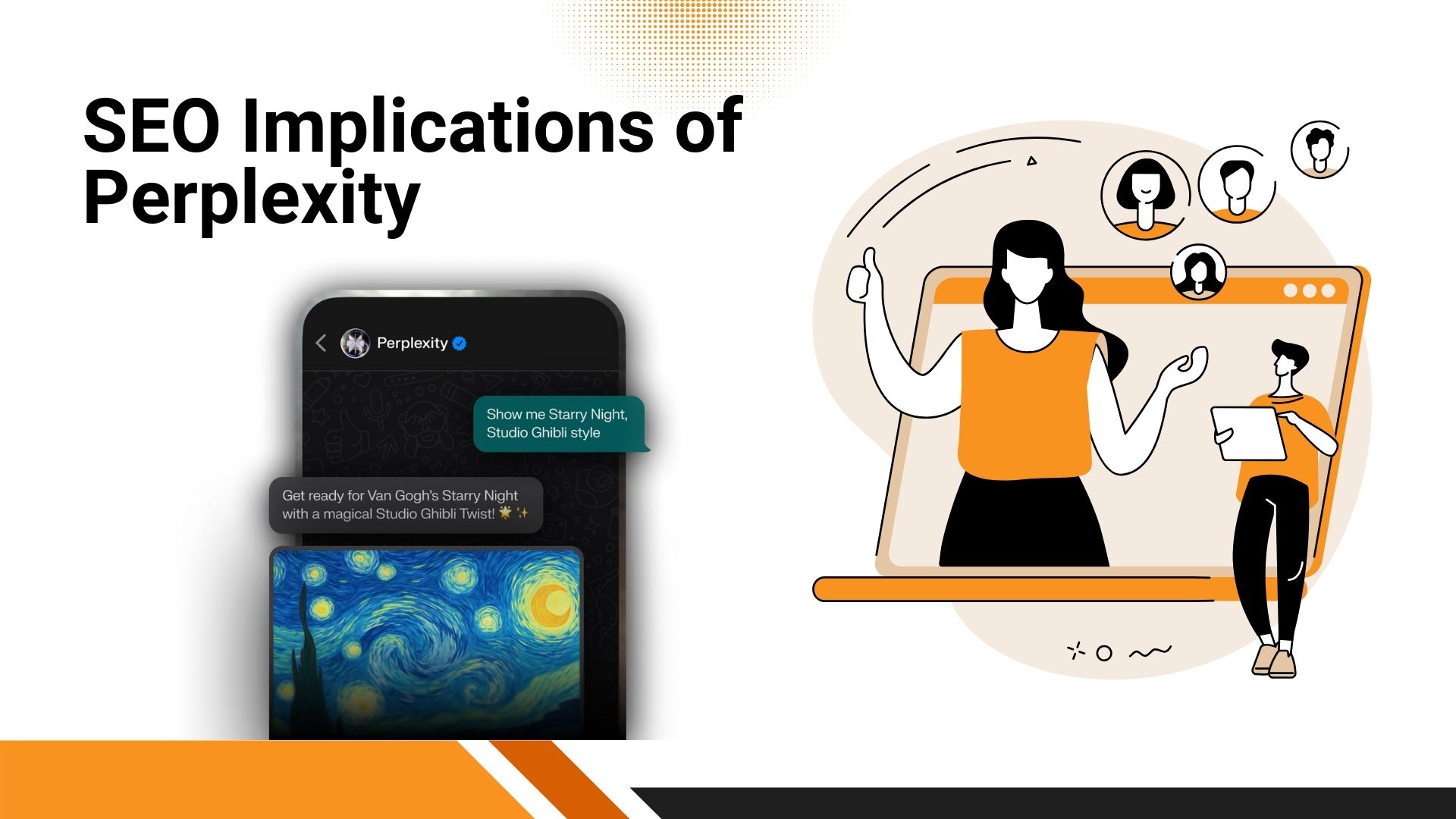
Visibility Beyond SERPs
Previously, success was being on the first page. The elevated statuses had clicks, traffic, and recognition of the brand. Such a model is not sufficient anymore.
With Perplexity, visibility exists outside Google’s first page. A brand cannot be ranked in SERP, but can be found within AI-generated responses. This renders the citation the new ranking. Assuming that your content is trusted, AI will give a direct reference.
This brings about new possibilities. Small locations with high expertise can compete with larger players. Perplexity has the potential to uplift their wisdom if they are believable. Authority shifts from search engine dominance to informational reliability.
Measuring Success
The old school of SEO gauged success by impressions, rankings, and clicks. These measures will continue to be important, but will no longer describe the entire picture.
New measurements are needed. It is necessary that the brands monitor the frequency of being mentioned by AI. The frequency of citations will measure the visibility. Even without direct clicks, mentions in an answer that is generated by AI can become trustworthy.
Engagement quality also matters. Visit Expertise, and find your site on Perplexity to spend more time. They already have confidence in your expertise, and hence, they are more willing to get involved or convert. Depth of engagement becomes more important than raw traffic volume.
Content Strategy Shifts
There is a need to change the SEO techniques to this new paradigm. Outdated strategies such as keyword stuffing or superficial listicles will not work. AI favors clarity, depth, and verified information.
Material should be organized in an easy way. Evidence-supported statements, clear headings, and concise paragraphs increase the likelihood of being cited. Authoritative references and FAQ-type answers can assist AI in recognizing value.
Brands also need to branch out into content forms. Articles, research reports, infographics, and expert interviews all will enhance the probability of being cited. The better-organized and more reliable your content, the more the AI will highlight it.
It is no longer about satisfying algorithms, but about creating authority. The best SEO strategy is human-first—transparent, credible, and valuable content.
Mini Case Example
Two nutrition websites are imagined. One of them is a massive style-of-life site that contains hundreds of articles. The other is a niche blog operated by a qualified dietitian.
The large portal can dominate the search engine rankings in SERPs due to its high-quality backlinks and strong domain authority. In Perplexity, however, the blog of the dietitian may prevail. Why? It is explanatory, clear in its articles, and has researched papers cited to support concepts.
Upon inquiry, “What are the advantages of a Mediterranean diet? The article by the dietitian may be favored by perplexity. It is concise, reliable, and addresses the question directly. The bad site becomes visible and does not even need to outrank the giant in Google.
The example demonstrates the future. Expertise, credibility, and clarity matter more than sheer size. AI-powered search rewards authentic value, not just technical SEO strength.
The New SEO Reality
Bafflement is the beginning of SEO outside rankings. The only way to succeed is to participate in the AI discourse. When your content determines the answers that people will receive, you will not be forgotten, even without the clicks. The difficulty is greater, and so is the chance.
Opportunities & Challenges
Perplexity AI creates new opportunities but introduces new challenges. Businesses must understand both sides.
Opportunities
Authority Building: AI rewards credible, well-structured content. Brands that create correct and detailed material are trusted automatically.
Level Playing Field: Small sites have an opportunity to play with the big players. Niche blogs or professional contributors may be frequently mentioned.
User Engagement: As AI provides direct answers, those interested in the information will spend more time on reputable sources. This generates devotees.
Variety in the content: Companies have a chance to experiment with Q&A, tutorials, infographics, and research articles. Different formats add AI citations.
Speed: The users retrieve answers more quickly. Adapted brands become visible without relying on click-throughs.
Example: A travel blog about a locality has expert guides with references. Perplexity consults such guides whenever a user inquires about places to explore without knowing. The small blog gets a much larger audience than its organic SERP traffic would have provided.

Challenges
Less Click Traffic: Direct answers will lower website access. Traditional CTR-based strategies may no longer work.
Addiction to AI Platforms: Companies make use of algorithmic decisions made by AI. The absence of citations can hurt visibility.
Mean ROI: Old measures of SEO, such as impressions and clicks, are less important. Brands need new KPIs.
Content Pressure: AI favors accuracy, clarity, and citations. Ill-organized or obsolete content is likely to be overlooked.
Power Struggle: It often happens that the loss of trust occurs due to minor mistakes. Citation is always more difficult than occupying a high position in SERPs.
Example: A giant e-commerce company is using product pages to make sales. Assuming Perplexity provides direct answers that include competitor products, their traffic and visibility may be lower, even though they are ranked high in Google.
Balancing Opportunities and Challenges
To be successful, you need to combine quality content with planning. Brands have to be concerned with credibility, clarity, and systematic knowledge. The process of tracking citations and activity replaces conventional search engine optimization. Early adopters can get opportunities out of challenges.
The Future of Search: Hybrid Landscape
The search of the future will involve both the conventional SERP and AI-assisted responses. The users will change according to their requirements.
Short queries will be sent to AI systems such as Perplexity. Complex shopping or research queries can still be based on SERPs. Ads, featured snippets, and knowledge panels will always align with the answer.
It is a two-system that brands have to adjust to. It will be necessary to optimize in terms of SERP ranking and AI citation. The success will be determined by the clarity of the content, its reliability, and its structure.
Search will be more conversational and contextual. The users will demand immediate and trustworthy responses and follow up seamlessly.
This hybrid landscape rewards flexibility. The businesses that strike a balance between traditional SEO visibility and AI visibility will be at the forefront. Ignorers of AI might become irrelevant, despite a well-placed SERP.
Conclusion
Search has ceased to be about links. Under Perplexity AI, users anticipate a fast, conversational, and credible answer. The shift not only questions the traditions of SEO but also opens new opportunities for visibility.
The future of success lies in the production of content that AI can trust, reference, and present to users naturally. The hybrid future is here. Flexibility will be a characteristic of winners.
FAQs
What is the difference between Perplexity AI and Google Search?
Perplexity gives a direct answer rather than a list of links. It summarizes findings of various sources, includes references, and makes conversational replies. Google SERP is aimed at ranking websites, whereas Perplexity is aimed at providing quick and trusted answers.
Will Perplexity AI replace traditional search engines?
It won’t fully replace them. Instead, these two models will coexist. Users will search using AI to find quick answers, and the SERP to do intensive research or shopping. The future will be hybrid-based, with AI-based insights integrated into conventional ranking systems.
What must businesses change in their SEO?
Businesses ought to aim at producing clear, well-organized, and authoritative content. The content must respond to interrogatives and refer to authoritative statistics. Citation by AI models can become as valuable as a high ranking on Google.
Will search driven by AI decrease site traffic?
Yes, in some cases. AI questions minimize the necessity to use links. Nevertheless, when your content is referenced, it will still establish brand authority and can bring about an engaged visitor who may seek further in-depth exploration.
What metrics matter in the age of AI search?
In addition to the click-through rates, significant metrics such as citation frequency, brand presence in AI responses, and content trustworthiness are relevant. Post-AI discovery engagement, such as time on page or repeat visits, is also higher than it was previously.