

Google’s Search Advocate Mr. John Mueller discussed a new video structure. According to him, Clip markup and Seek markup video Structure could help the creators gain more views and recognition for their videos in Search Engines.
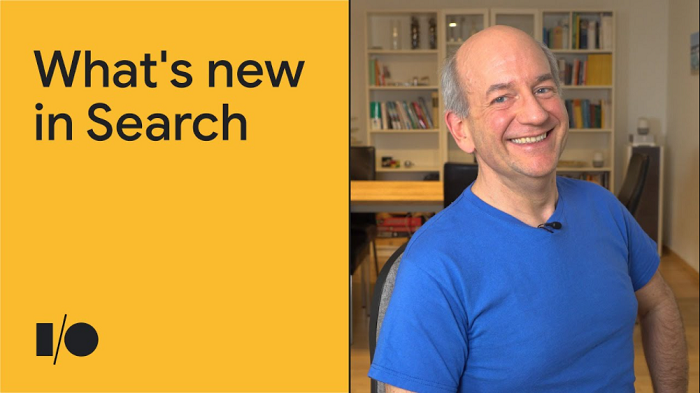
John Mueller discussed this in Google I/O, which is Google’s annual developer conference held on the 18th of May in California. The new structure of the video is termed Clip markup and Seek markup.
The primary objective of this video structure is to assist Google in creating key moments of videos. Google Updated Quality Rating Guidelines (Click Here)
What Is It About?
Clip markup and Seek markup are all about key moments of videos is. Google introduced this feature in September 2019. Basically consists of a timeline divided into multiple parts. Each part of that timeline depicts what is happening in the video at that specific time slot.
In Google I/O, John Mueller was presenting about what are the new features in the Search Option. It was then when he highlighted that these new video structures would help the videos reach out to more audiences.
According to Mueller, there are two ways for listing the key moments of a video in a very simple and concise process.
Clip Markup
As per John Mueller, to support these features, the publisher’s first possible markup is the Clip markup. In this structured data markup, the information of the video segments can be provided within the video using a web page manually.
Hence, as a result, you can directly display all these segments as search results. This would make it easier for the user or viewer to directly go to the part of the video they want to check.

This is a much easier job to be performed. All it needs is a tag on text form, the starting time, and the URL that can link to that exact time slot directly. The publisher can do this all manually.
This would result in Google search being able to push or highlight the video. Appropriately to the user when searched for.
Seek Markup
The main drawback of Clip markup arises if the publisher fails to manually enlist the information of the segments for all the videos uploaded on his site.
The Seek markup is specially designed for handling these sorts of situations. In this markup, Google automatically analyzes the contents of the video and segregates segments using machine learning.
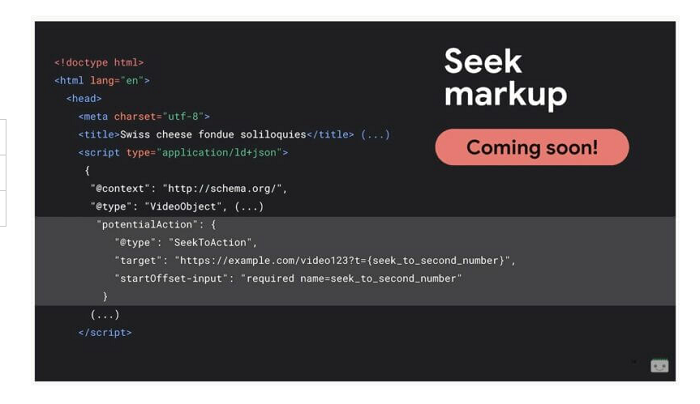
All that the publisher needs to do is notify them of the process to link an arbitrary timestamp within a video uploaded on their site. To use this feature properly, the publisher needs to use Seek structured data on those particular pages of the site.
This would help Google get a clearer image to link the parts appropriately.
In the end, John Mueller said that the Seek markup has much more features present in it. But currently, it is under development. He also stated that the entire team is working hard to make it available widely for all in the future.
See Also : 9 Kick Ass Ways to SEO with Google Web Master Tools
Conclusion
This was all about Clip markup and Seek markup. Hope it was useful!
See Also: Google video structured data with Clip markup and Seek markup